
Image by StockSnap from Pixabay
OK, let’s put that more politely. ” Cutting welfare spending is not only morally bankrupt, it’s economic vandalism”. Here’s why.
“Welfare benefits”. Those words are deliberately chosen to cast the recipients as “weak”, “scroungers”, etc. “Benefits” has come to suggest something idle feckless people have as a nice little extra earner to make life easy. “Welfare benefits” is now used to mean what used to be called “social security”, the idea that society as a whole looks after those in need of some help. Just like a large family gives help to a family member who has suffered a setback.
(Why do some people resent and make snide remarks about this idea? A curious and not very savoury quirk of psychology? The belief that people who are strong and work hard will never need financial help? Tell that to someone who develops a neurological condition, or is made redundant when a whole industry contracts.)
In the words (read here) of Emeritus Professor of Accountancy Richard Murphy: “If you ask the average politician about benefits, they will in some way or other imply that we are pouring money into a black hole and we’ve got to cut them, because that’s the only way in which the government can balance its books, and apparently the government balancing its books is vital for economic growth.” Read the full article here.
He goes on to say: “All of that is complete and utter nonsense. The actual reality is that making benefit payments in the UK is one of the best ways that we have available to us to stimulate growth in this country.” Read on to find out why that is.
After WW11, the wise and visionary government of that time established a system by which “society” (meaning, the UK State) would for the first time in UK history make provision to extensively protect the population from the hardship and poverty that might result from old age, ill-health, disability, and the episodes of unemployment that often arose from changes in the economic cycle. This was part of an updated comprehensive “National Insurance” scheme.
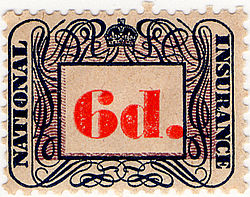
So, income to protect those people was administered by the Ministry for Social Security, which in 1968 became part of the Department of Health and Social Security. (I worked in a local office in the early 1970s).
The system then had two components, “supplementary pension” which was a top-up for pensioners to the state pension, assessed on their individual income and outgoings. The other being “supplementary benefit”, providing either a top-up or main income for those under pension age. The principle, more or less, amounted to a guaranteed minimum income, depending on a person’s circumstances.
The scheme was actually broader in aim than just that- here’s a fuller explanation from the House of Commons Library.https://commonslibrary.parliament.uk/research-briefings/cbp-9535/
“Ah, but the cheats” is often heard. Okay, let’s face it, there exists a small minority who cheat or abuse the system. Always has been, always will be. But that in no way justifies a hard line on the vast majority who actually, often desperately, need that money. Or cutting the overall level of social security payments, either by actual cuts, or by stealth by failing to update for inflation.
“The cost of welfare is unsustainable” is so often heard. Politicians of every major Party, cheered on by media pundits. 
Not only is this a falsity based on the “household budget” fiction that has been drummed into us for decades- but it dishonestly suggests that the money paid for benefits somehow disappears down some black hole, and is lost to the economy- when the reverse is the case. (As so often, we’re being conned.)
Why is “unsustainable” utter bollocks? Here’s a neat summary by AI overview via google: “Spending by benefit recipients stimulates the economy by increasing consumer demand, which supports businesses and employment. This spending also generates tax revenue for the government through VAT, corporation tax, and income tax paid by the businesses and their employees. By ensuring recipients have money to spend, the benefits help to “fuel government revenue” and are not “lost,” contributing to economic stability and growth. (more details- see note 2)
It’s not difficult to understand, is it? People on benefits, eg Universal Credit, pay their bills like everyone else, and then spend what’s left. They buy what they need from the shops which sustains small and large retail businesses. Sometimes have to replace clothing/do household repairs. While out shopping, may pop into low-cost cafes, Save up for family occasions, etc. A lot of this spending incurs V.A.T, so they’re paying tax. The employees of the businesses they sustain pay income tax, and the businesses Corporation and other taxes- so, a hell of a lot (or all eventually) is drained out of the economic system to balance spending. But most importantly, after helping to drive those businesses into prosperity, which feeds on itself.

“Nonetheless, though, however it is looked at, the vast majority of the benefit payments in the UK go to people on lower incomes. And if there’s one thing that we know about people in the UK who are on lower incomes, it is that they have very few savings. Only 9% of UK wealth is owned by people in the bottom half of the income distribution. And as a consequence, what we know is that the vast majority of the money that they get month in, month out is spent by them and virtually straight away.”(Murphy.)
When the wealthy get more money, they might buy a few more luxury goods, but they stash away most of it. That money, in savings accounts or financial investments, doesn’t do any good to the rest of our economy, it just sits there. “But if we start injecting money instead into the economy with those who are amongst the poorest benefit recipients, what we can guarantee is that we get the maximum payback on that money because it will circulate many more times before the wealthy get their hands on it, put it aside, and break the cycle of growth, which it gives rise to.”(Murphy)
How great is this boost to the economy? Economists talk about the “multiplier effect”, which is the multiple by which the general economy is, pound for pound, stimulated by government investment in any given sector. Richard Murphy estimates thst for benefits, that multiplier is x3. (It is generally thought that the multiplier for the NHS is x4). That means that every £1 paid in social security generates (approx) £3 worth of economic activity in the country’s economy.
And while doing this, they protect the vast majority of those who receive the money from hardship or poverty. Hardship and poverty whose side-effects include poor health often linked to poor diet, poor education outcomes for children, anti-social behaviour, and other negative effects which end up costing us all dearly.
So, if you’ve read and understood what I’ve written so far, “benefits” pay for themselves. They’re not a “drain” or “burden”. They’re the most effective way for a government to put oil into the economic engine, to put fertiliser on the economic farmers’ fields. (You’d think that a government that harps on about “growth” being the saviour might grasp the vital importance of that, but it seems not.)
Note:
Not about welfare benefits, but relevant to the idea that a healthy economy depends on the ability of people (“consumers”) to actually spend money on goods and services: here’s a blog post from Richard Murphy on how wages-often presented as a burden or cost to businesses- are in fact a very important part of demand, on which an economy like ours depends. Louis Vuitton handbags (or whatever it is they make) will never create prosperity alone.
 the pound in your pocket