Bristol September 12/13th 2025
“Changing the conversation around money and the economy in the UK”
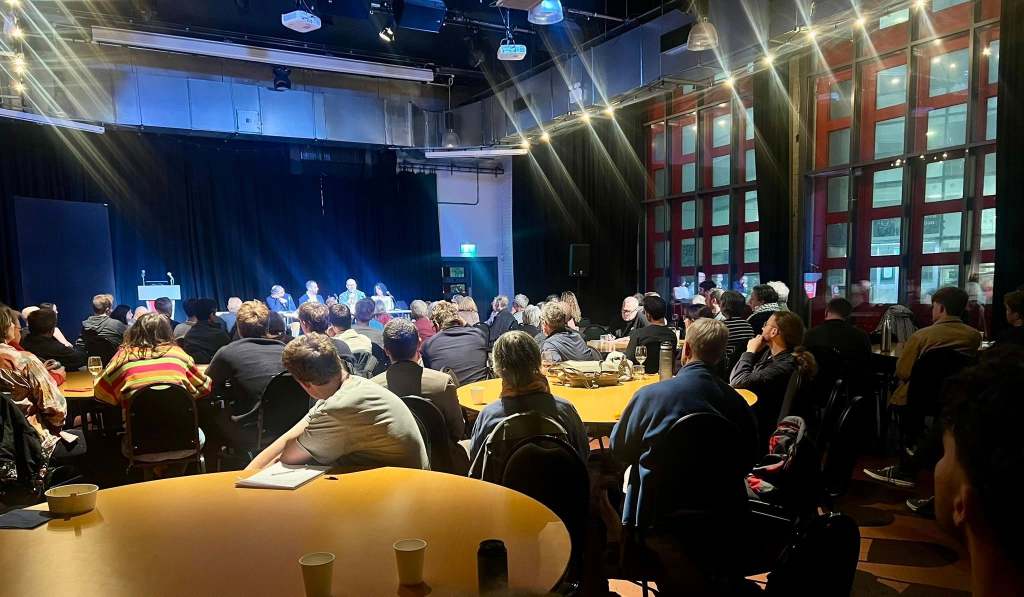
On Friday 12th September, Modern Money Lab UK held an anti-austerity Conference over two days at The Station, Bristol, to explore how the modern understanding of the government money and fiscal system (Modern Monetary Theory, MMT) gives a strong perspective on various policy issues. Modern Money Lab is an international educational non-profit organisation, which organises this conference and workshops in Sheffield, Vienna and Amsterdam. Their aim is “Changing the conversation around money and the economy in the UK”. I got on the bus and showed up.
- “FINDING THE MONEY”
First was a showing of Marien Poitras’ film ‘Finding the Money’, which is fairly described as “An intrepid group of economists is on a mission to flip our understanding of the national debt — and the nature of money — upside down. This film will change your perspective on how countries around the world can tackle the biggest challenges of the 21st century: from climate change to inequality.”
Not just talking heads, the film uses lots of video clips, archive film and photos, sketches etc to explain the development of MMT from a historical point of view. It includes an explanation of what money really is- not a means of barter, as once taught, not a thing of intrinsic value, but a record of credit and debt. As Prof Randy Wray says, “There is no such thing as money without debt”. It goes on to look at the real nature of Government Bonds (“Bonds are interest-bearing currency”); and why government “borrowing” is really no such thing, in the way we understand borrowing in everyday life. It counters certain false allegations against MMT, such as allegations that MMT says “deficits don’t matter”- as Stephanie Kelton says in the film “Deficits do matter- they can be too big or too small”. And, how Markets (so often referred to in awe by the politicos and media) interact with how money policy really works- “markets only developed AFTER money”. How the expenditures of governments are primary, and markets secondary. Also, a look at how inflation can be managed in relation to government investment, interest rates, demand management, (for example how inflationary pressures were successfully controlled during WWII).
I’ve just given a brief picture of what the film covers, but you can watch it via this link . I promise you won’t be disappointed. The main speaker is Professor Stephanie Kelton (SK) who always talks engagingly and very comprehensibly.
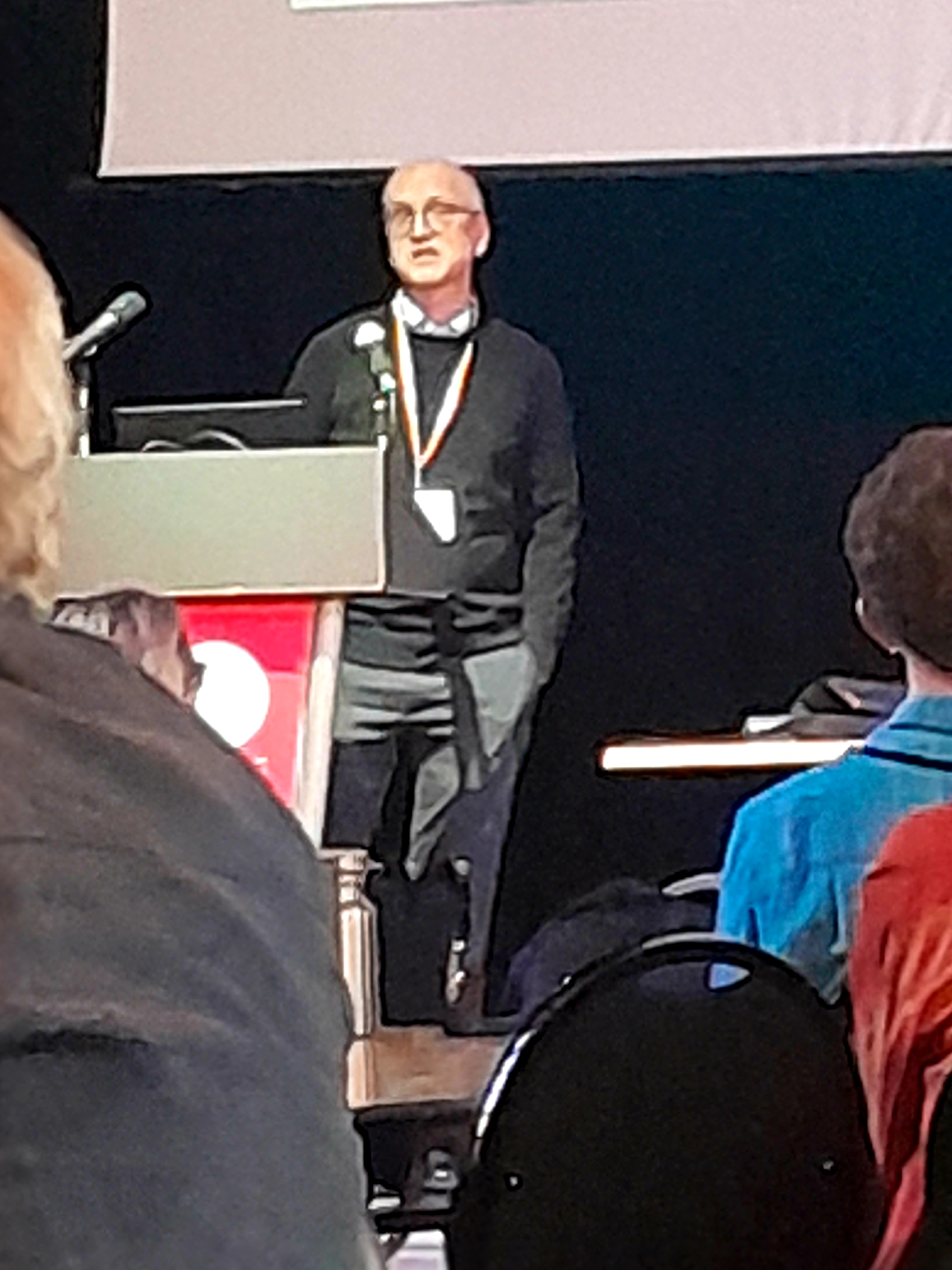
- Session 2- Austerity as a Political Choice: Associate Professor Steven Hail (Director, Economics of Sustainability Graduate Program, Torrens University and founder of Modern Money Lab)
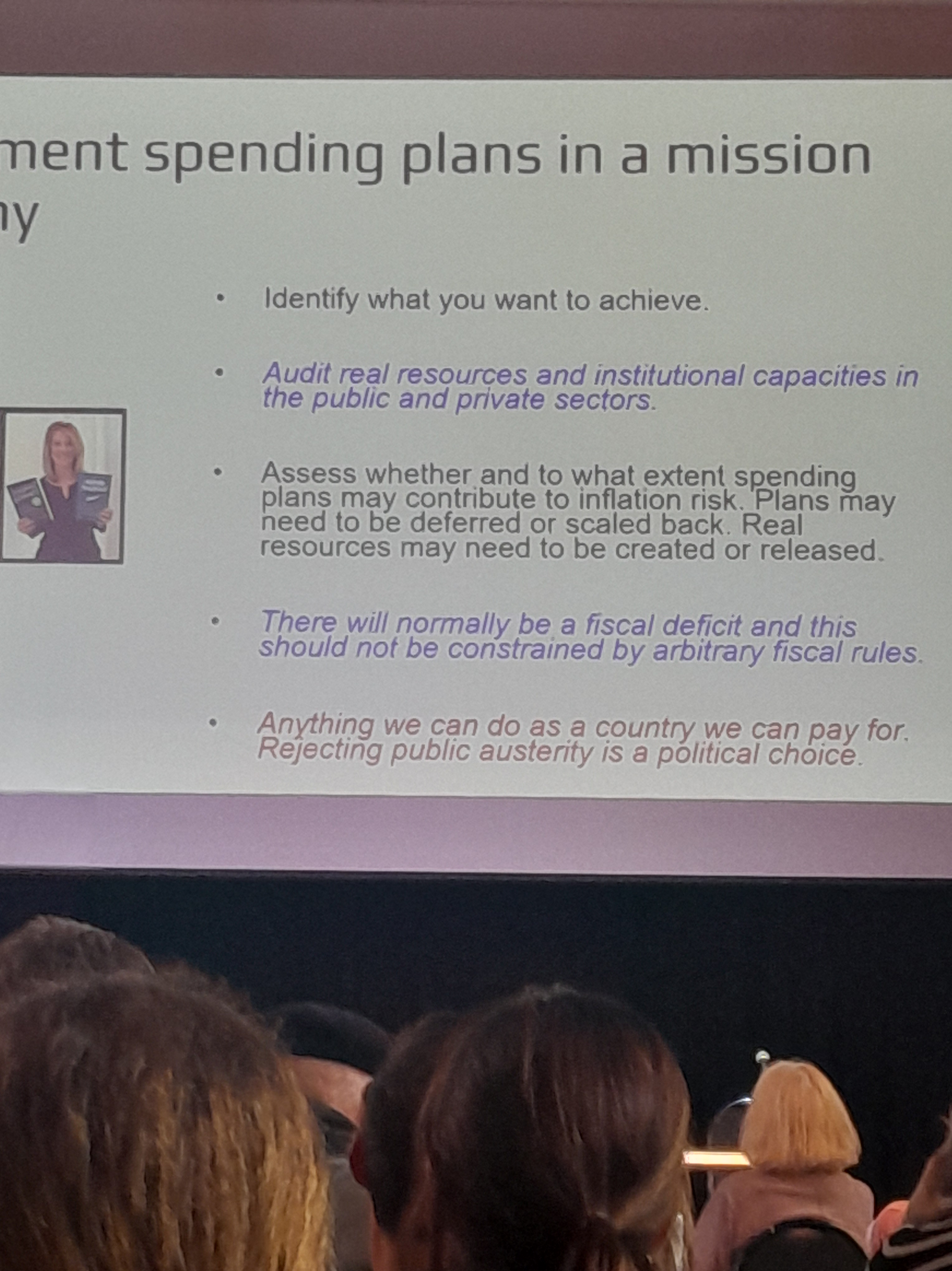
- Followed by- Resourcing a Greener New Deal, with Professor Kelton. After these presentations, there was a wonderful opportunity for a live Q&A with Stephanie Kelton via a virtual link.
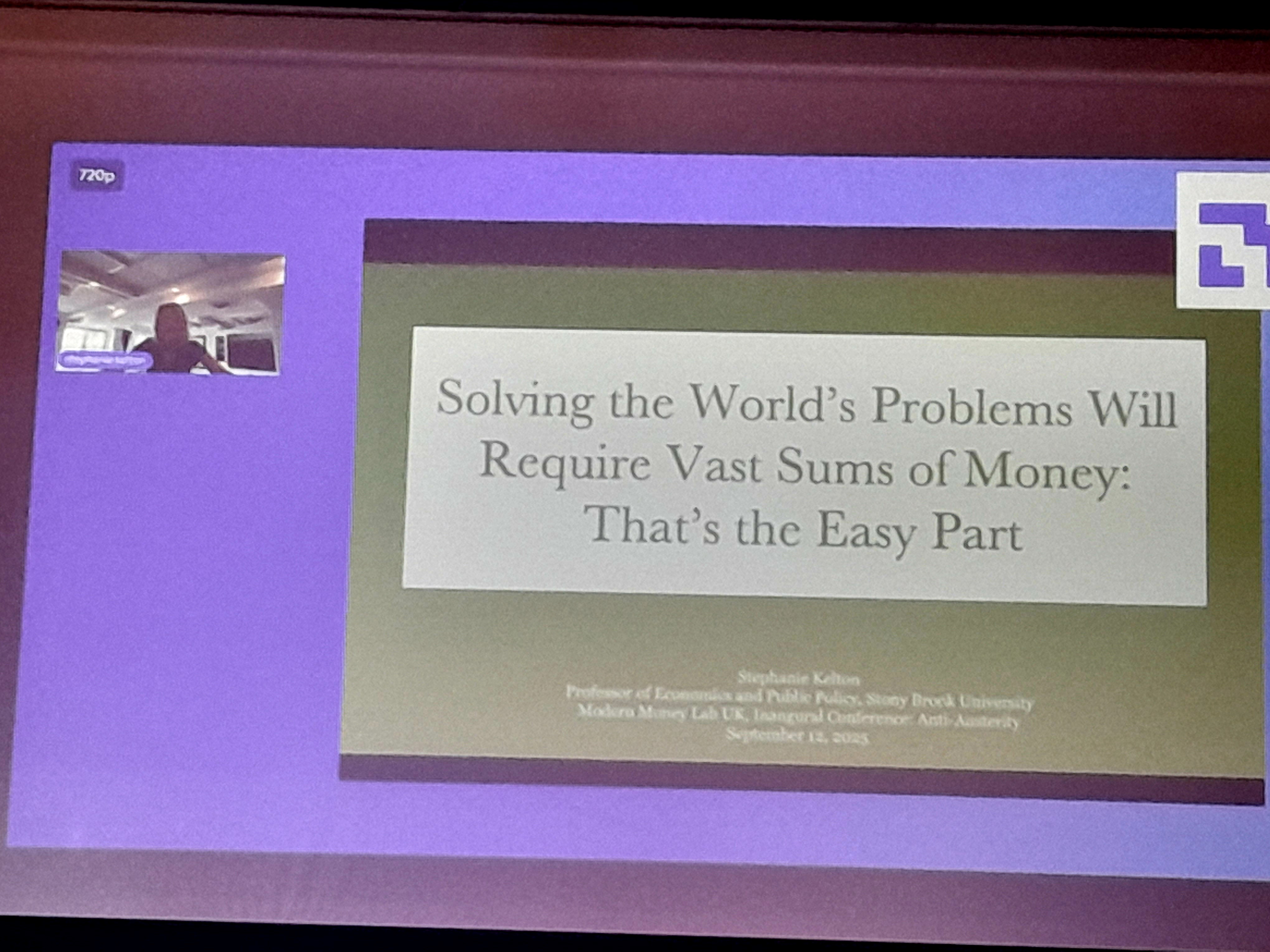
- Topics covered included how policy to produce a better outcome for people and society has been done before (it’s not something new) in the Post-War period, using the guidance or perspective provided by J.M.Keynes; Why the Liz Truss budget was a crisis-the real reasons; how the neoliberal media and pressure groups try to frighten the people about fiscal policies by throwing out huge, often fictitious numbers (“meganumophobia”); the resource planning that is of primary importance before government investment takes place.
- The Political Economy of the UK – moderated panel discussion
A panel session analysing the political economy of the UK, with a focus on the unnecessary damage from decades of austerity. Chaired by Randeep Ramesh (chief leader writer at The Guardian), alongside Plaid Cymru Councillor Mark Hooper, Sasha Josette (co-director of the Working Class Climate Alliance and long-time organiser and strategist) and Zack Polanski (leader of the Green Party and elected member of the London Assembly).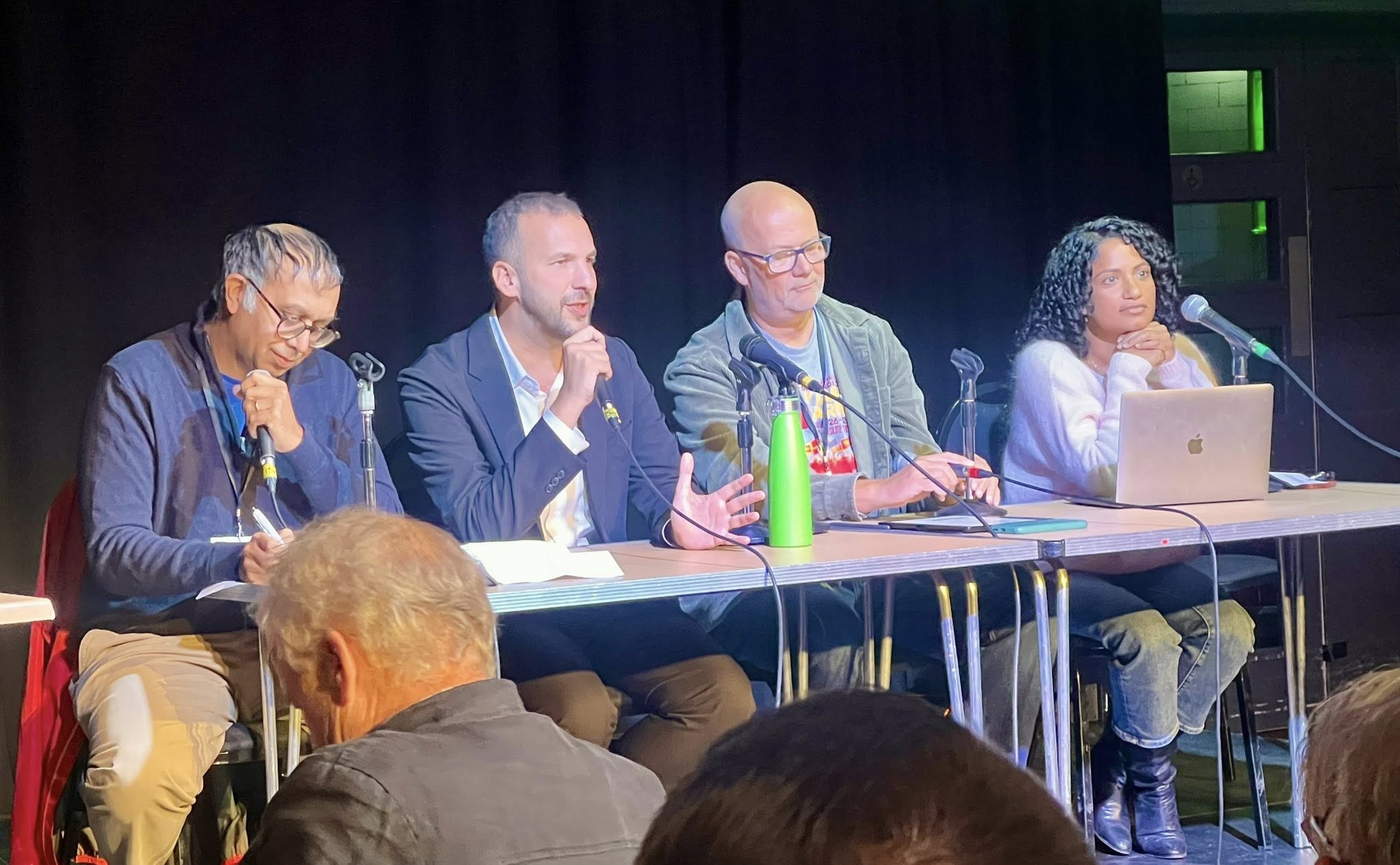
Outstanding moderation by Randeep Ramesh gave an opportunity for a fascinating discussion, including Zack Polanski  demonstrating a deep understanding of the real nature of fiscal policy as it affects policy, with a very shrewd grasp of how this can be effectively applied. Including the concept of “Throughtopia”, the focus on desired outcomes in order to identify policy choices.
- SATURDAY
What a Greener New Deal and wellbeing economy would look like in the UK: Professor Tim Foxon (University of Sussex), with response from Emma River-Roberts (Goldsmiths University)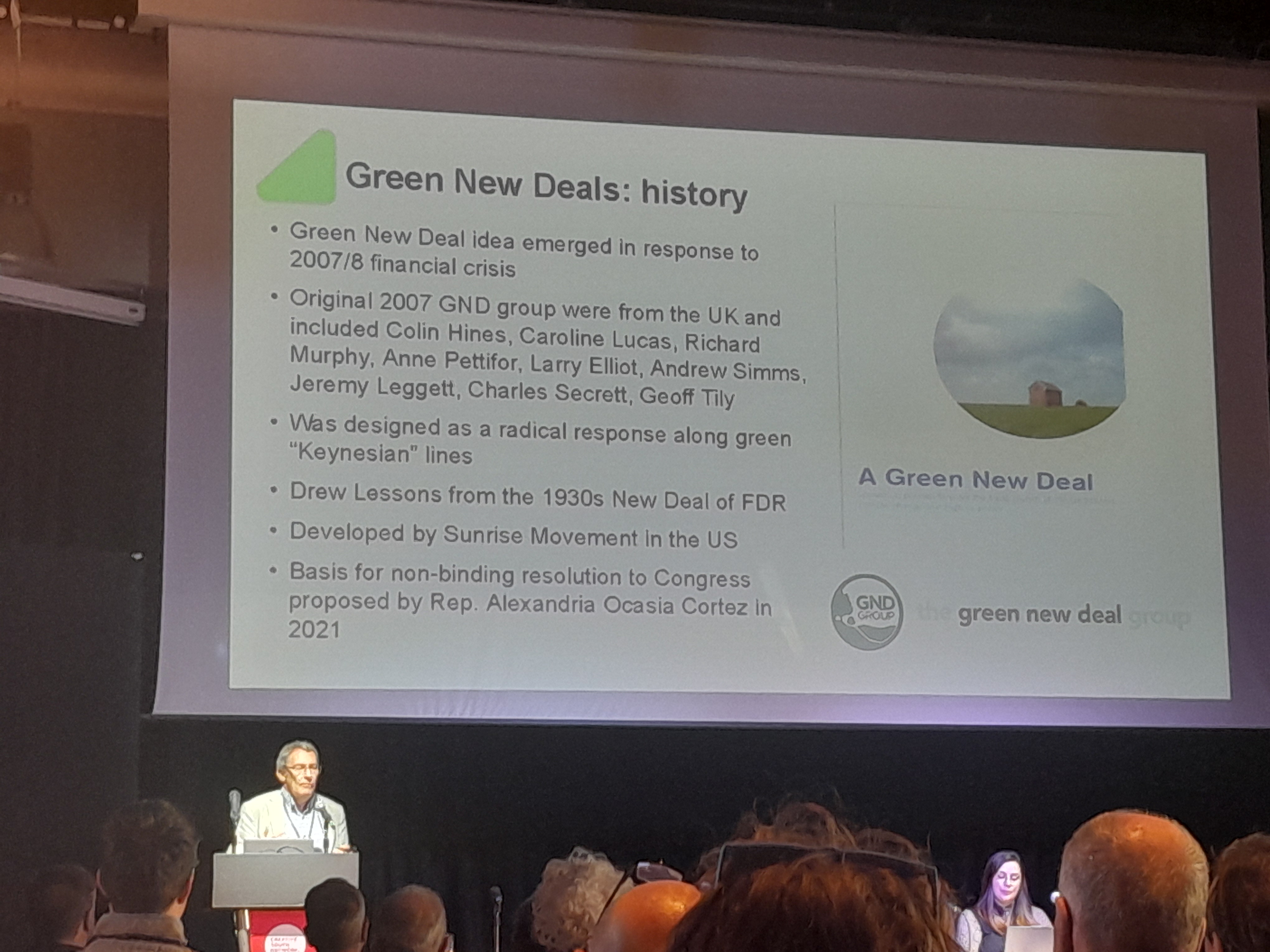
- Tackling health inequality in the UK: enabling people to live healthier lives, and rebuilding an NHS and care system that works for everyone. Chaired by William Thomson from Scotonomics, alongside Dr. Jaideep Pandit (professor of Anaesthesia at the University of Oxford) and Emma Hughes (Just Treatment). Example-Willie Thomson pointing out that 300,000 excess deaths between 2010 and 2015 could be attributed to austerity policy.
- The UK’s housing affordability crisis: what can be done? Chaired by Sheridan Kates (Modern Money Lab UK and Green Party activist), alongside Sam Kidel (Head Organiser for Bristol, ACORN) and Simon Ripton (Derbyshire Dales Labour District Councillor, former Director Notts & Lincs Credit Union). Example– how fiscal rules in this area are deeply flawed because they ignore the asset side of the balance, i.e. the homes created.
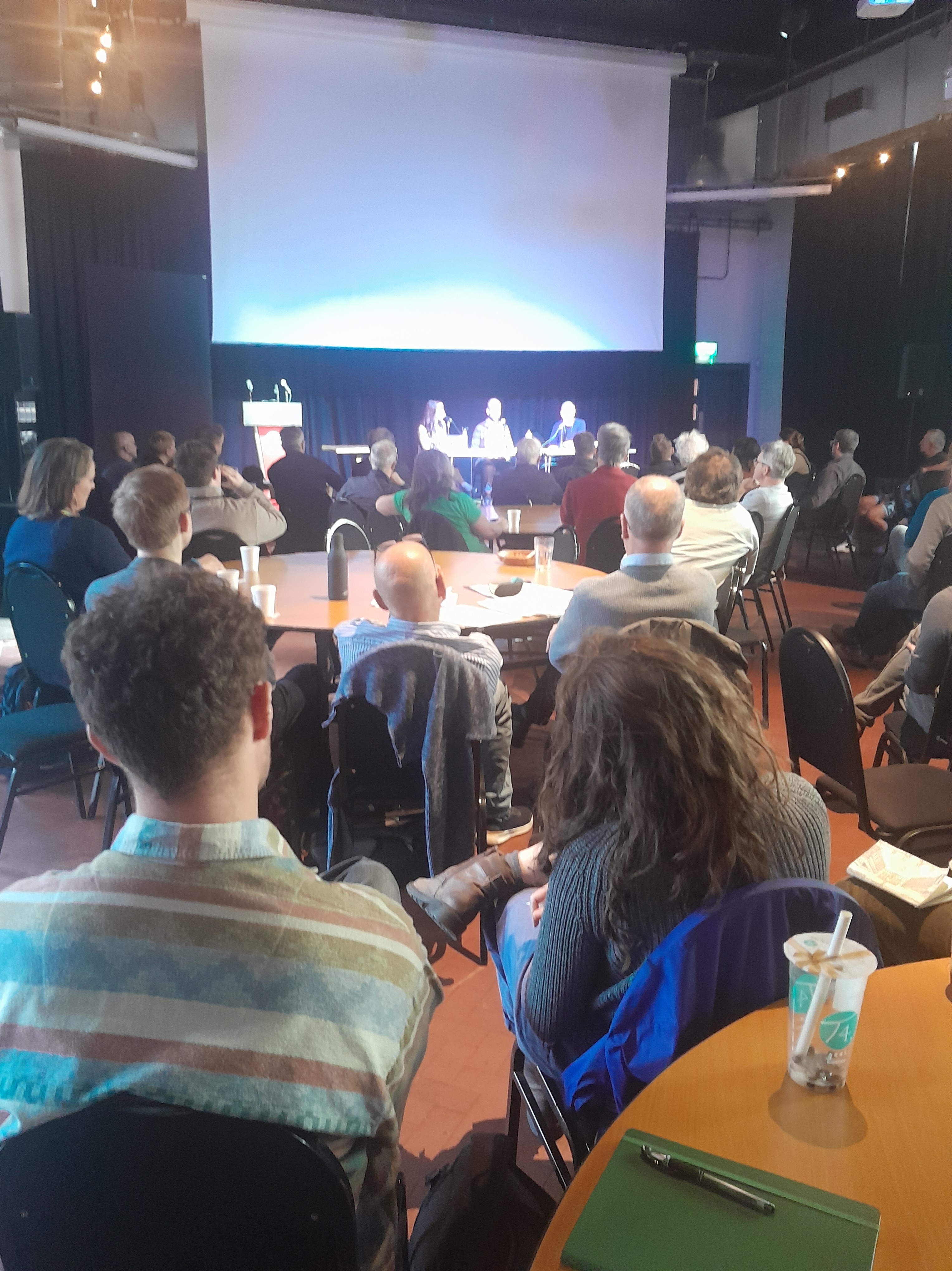
- A good job for everyone who wants one: ensuring full employment in the UK through a government job guarantee. Chaired by Phil Armstrong (Association for Heterodox Economics member and teacher), alongside Geoff Tily (Senior Economist, Trades Union Congress), Patricia Pino (PhD candidate at UCL Institute for Innovation and Public Purpose and cohost of the MMT Podcast) and Steve Laughton (former trade unionist, and author of upcoming book The Money Sham). Examples– Keynes: “If you look after employment, the Budget will look after itself”. Phil Armstrong reminded us that on a desert island, money is of no use, only the actual resources of food, water, shelter, materials- a principle which also applies to our modern society, which has the ability to generate Pounds Sterling easily, but only with due regard to resources.
- VENUE
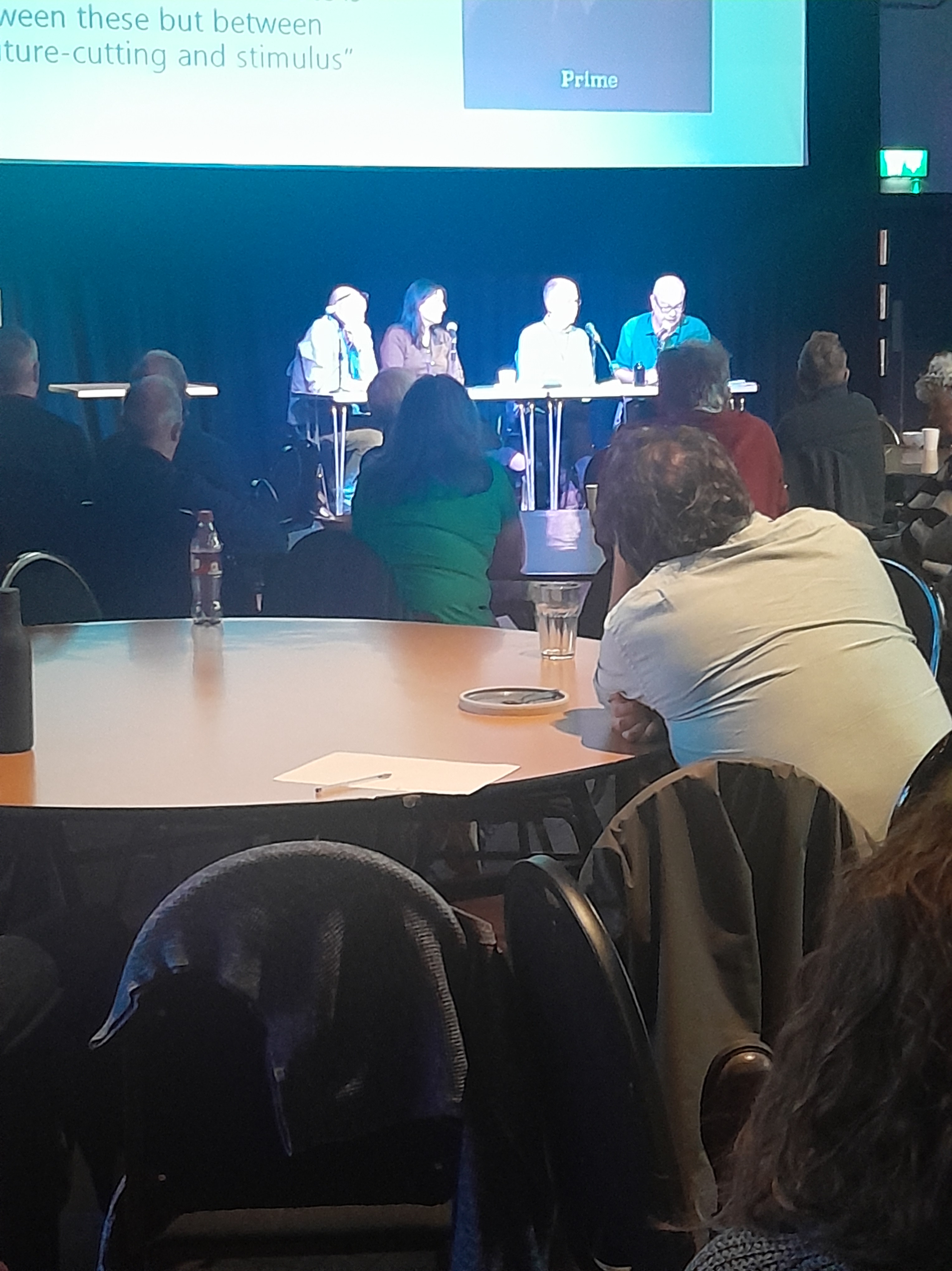
The Station was the former Central Bristol Fire Station, now a community hub mainly housing the Creative Youth Network. The tall doors (high enough for fire engines to enter and exit) have been given effective secondary glazing to almost silence the roar of traffic to the front, and you can see the former ladder-training tower in the yard to the rear.
- AUDIENCE
There was a strong attendance, sold out at the venue on the Friday, plus online attendance. Attendees were of a wide range of ages, from student-y to a handful of likely-septuagenarians like myself. Some were new to the lens of modern monetary understanding, but seemed to be very interested. General enthusiasm was high, and one of the panel speakers declared that once the conditioning of the last 45 years is overcome, there is a very fertile ground out there in society for a different approach. to economic public policy.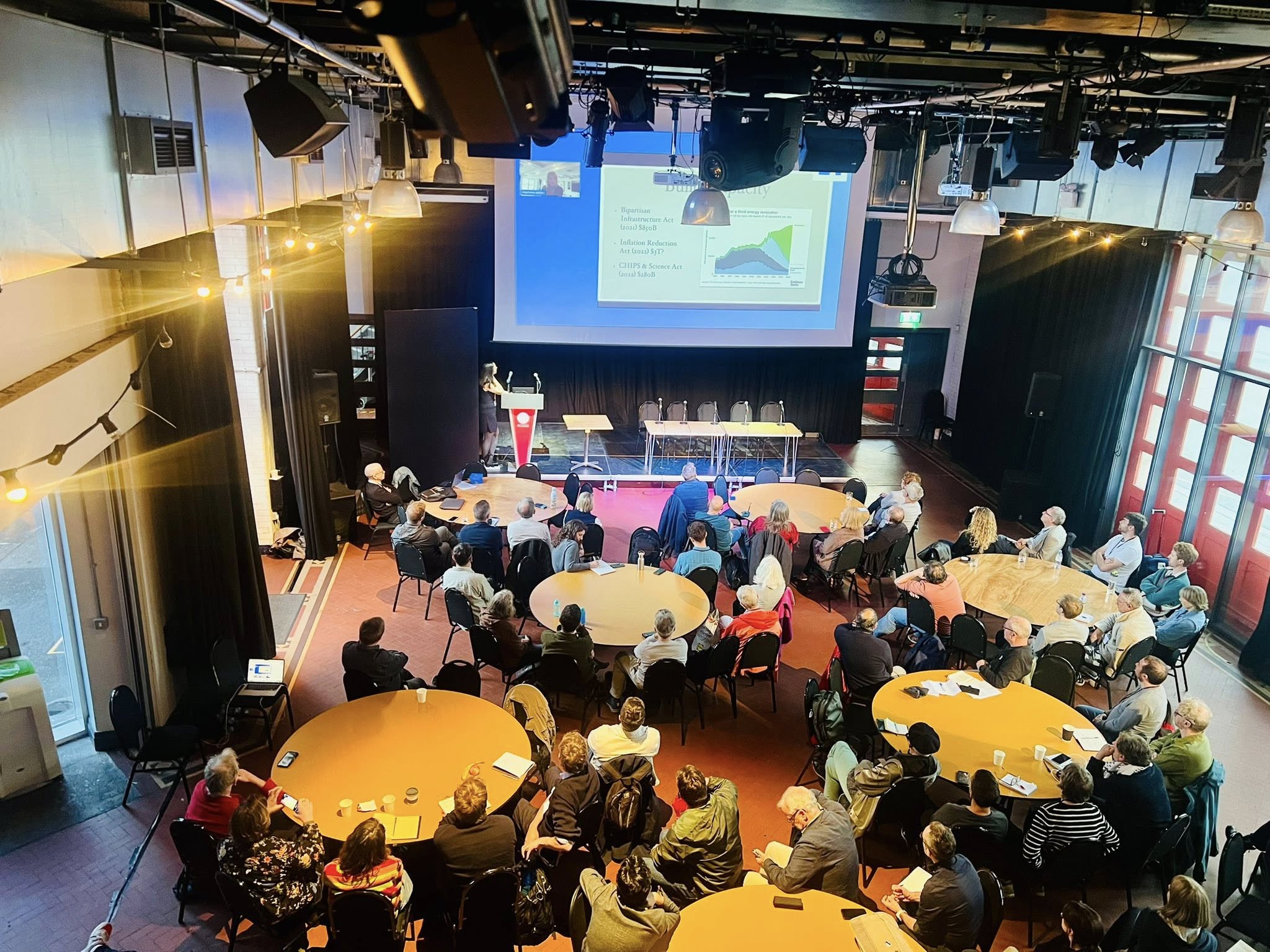
Notes: 1. photos-Modern Money Lab, or my own(the poorer quality!) 2. You can read my introduction to Stephanie Kelton’s ground-breaking booK HERE
 the pound in your pocket